SHAATHI PROJECTS
At Shaathi Foundation, we are committed to breaking the stigma surrounding menstruation and promoting women's health and empowerment. Explore our ongoing projects aimed at providing access to menstrual hygiene products, empowering women with life-changing skills, and raising awareness about safe and clean menstrual hygiene practices.
Safe Haven-Pad Bank Project
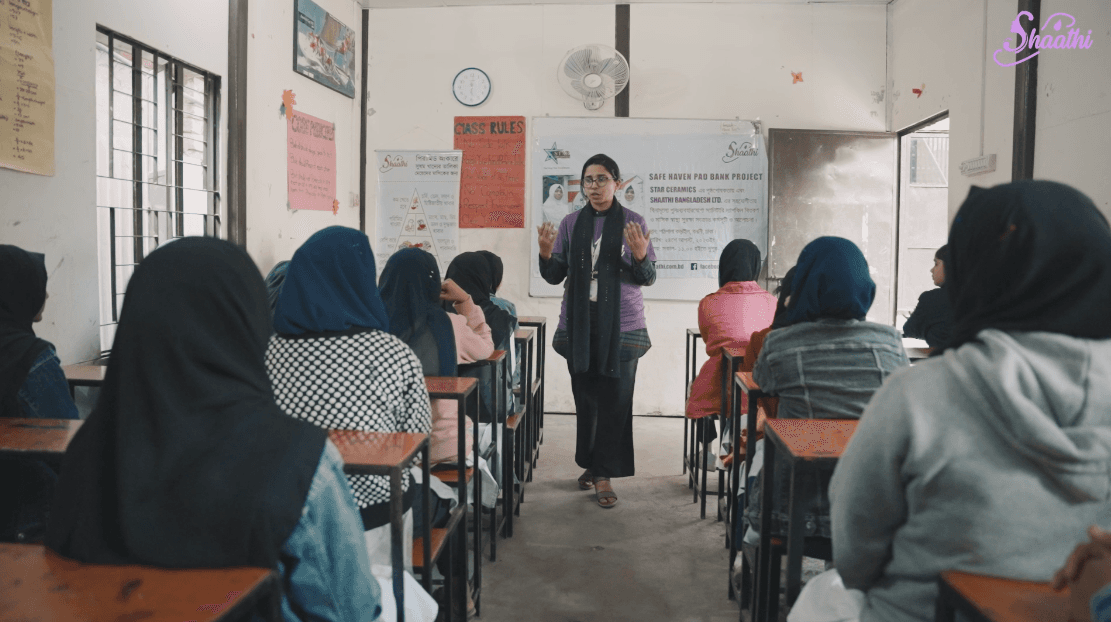
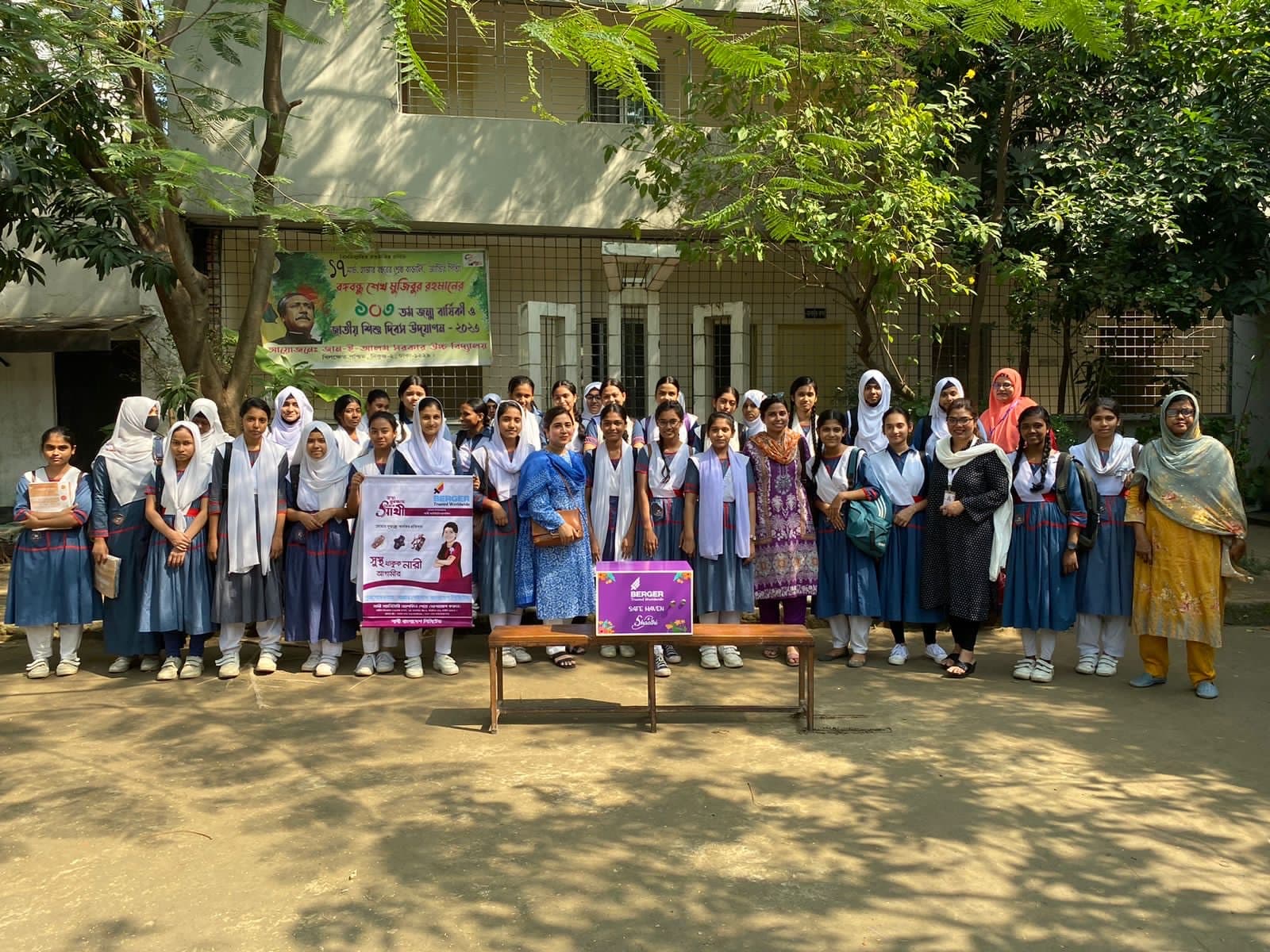
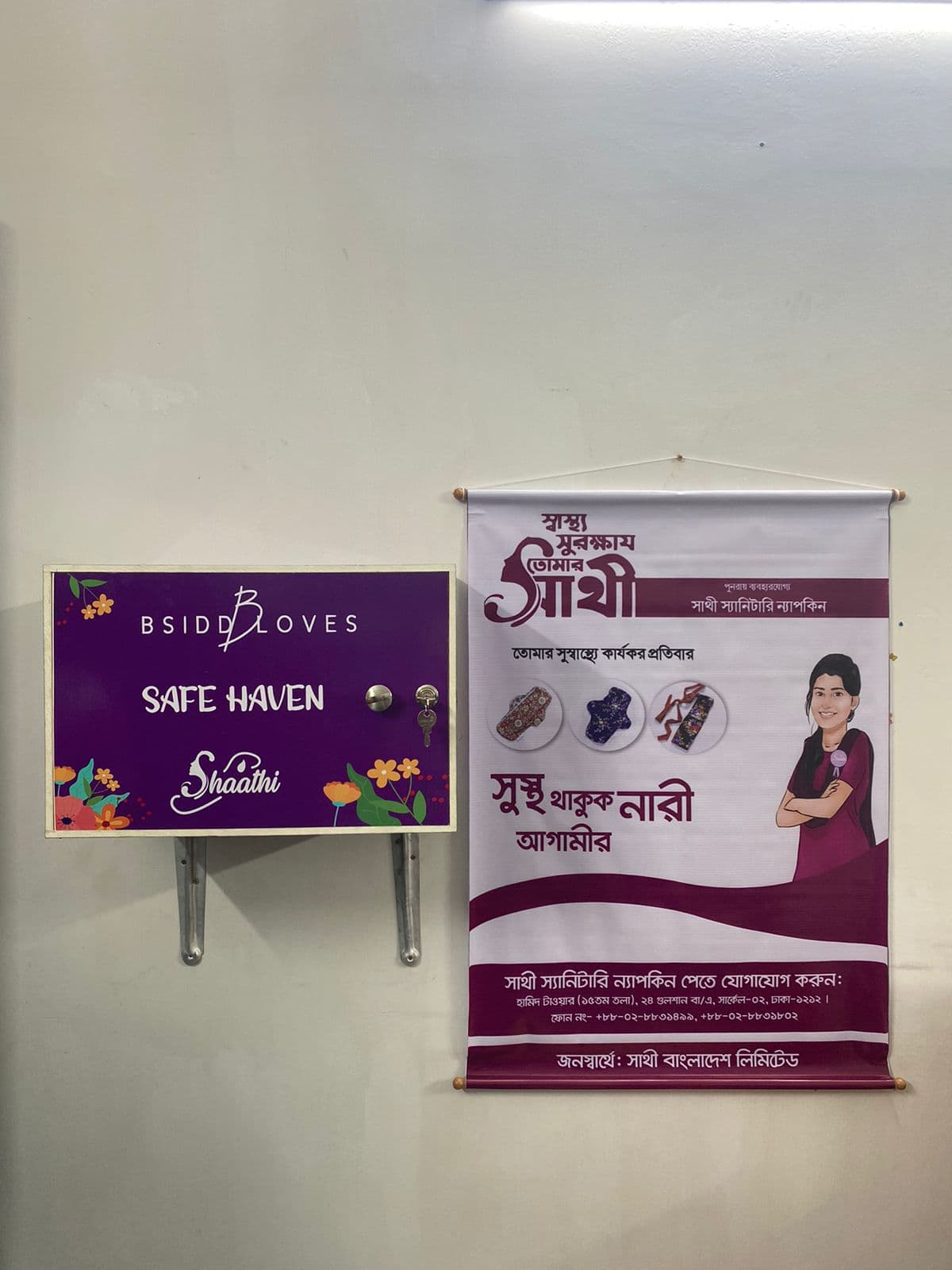
The "Safe Haven" project aims to combat period poverty and empower girls by providing access to menstrual hygiene products in schools. Through the installation of pad banks in schools, we ensured that 5000 girls across Bangladesh have access to durable and comfortable reusable sanitary napkins, preventing them from missing out on important school days due to menstruation.
Our Approach
Through the installation of pad banks in schools, we ensure that girls have access to sanitary pads, preventing them from missing out on important school days due to menstruation. Additionally, we provide education on safe and clean menstrual hygiene practices.
Impact so far
- Number of Schools: 100
- Girls Sensitized: Approximately 5000
- Support Provided: Girls received education on menstrual hygiene practices and a set of menstrual kits. Pad banks were installed in each of the 100 schools.
Why it Matters
By ensuring that girls can manage their periods safely and hygienically, we enable them to continue their education uninterrupted. Empowering girls through education not only benefits them individually but also increases social and economic participation and contribute to the overall development of Bangladesh.
Samia
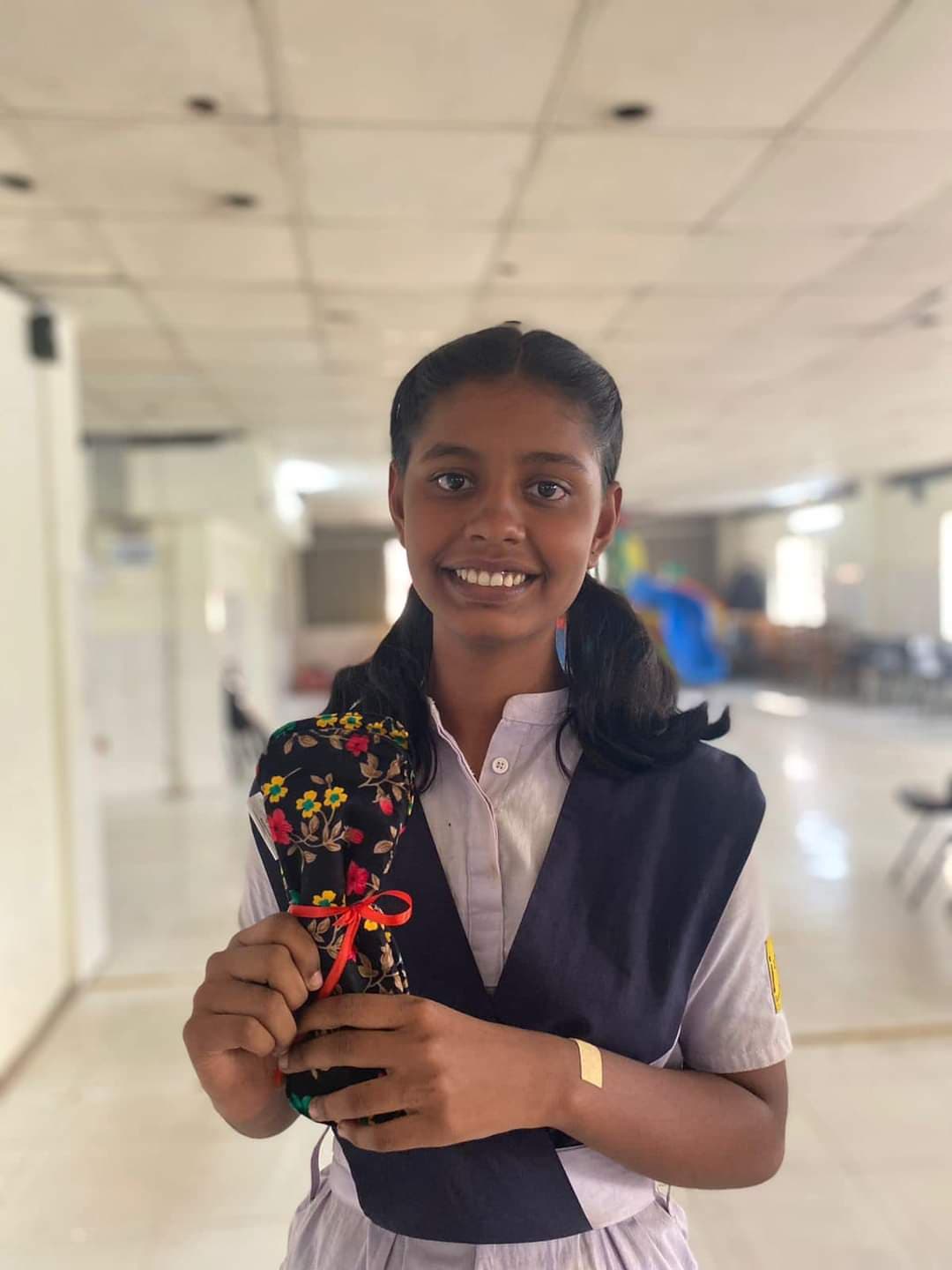
“Thanks to Shaathi Safe Haven pad bank, my school days are now anxiety free. The reusable sanitary napkins provide confidence and security, allowing me to focus on my education without worries. Grateful to Shaathi for empowering girls like me.”
Give Women the Gift of Independence
Our "Give Women the Gift of Independence" project provides free training to the women and girls in Korail Slum, Dhaka, empowering over 500 women and girls with the skill to make durable and eco-friendly reusable sanitary napkins. By teaching them this life-changing skill, we not only ensure access to safe menstrual protection but also help protect the environment by reducing plastic waste.
The Problem
Many women and girls in Bangladesh are often forced to use improvised materials such as rags, newspapers, and other unhygienic means to manage their periods. For those who cannot access menstrual products, many have no choice but to reuse the same one for many days, leading to serious health risks. This lack of access to menstrual products can have devastating impacts on a girl's life, including the possibility of child marriage, early pregnancy, and vulnerability to violence and abuse.
Our Approach
We provide free training in how to make durable and eco-friendly reusable sanitary napkins at our sewing center located in the heart of Korail slum, Dhaka. We equip women and girls with a life-changing skill and help to protect the environment with access to safe menstrual protection and gain financial independence with the newly acquired skill.
Environmental Impact
Shaathi reusable sanitary napkins significantly reduce environmental harm compared to disposable ones. Disposable pads are primarily made of plastic and other non-biodegradable materials, contributing to massive landfill waste. Each pad can take 500-800 years to decompose, releasing harmful toxins into the soil and water. In contrast, Shaathi's reusable napkins are made from eco-friendly, biodegradable fabrics designed for long-term use, reducing waste generation. Reusables also eliminate the improper disposal issue, which often leads to environmental pollution and harm to wildlife. By choosing Shaathi, users help minimize plastic waste, conserve natural resources, and promote a sustainable lifestyle.
Impact so far
- Location: Korail Slum, Dhaka
- Women Empowered: Over 500
- Training Provided: Women and girls are taught to make reusable sanitary napkins
Benefits
- Access to safe menstrual protection
- Environmental sustainability
- Income generation for themselves and their families
Why it Matters
By providing women with the means to produce durable and eco-friendly sanitary napkins, we not only empower them but also contribute to environmental protection and economic stability.
Join us in giving women the gift of independence and sustainability
.png&w=3840&q=75)
Swapna
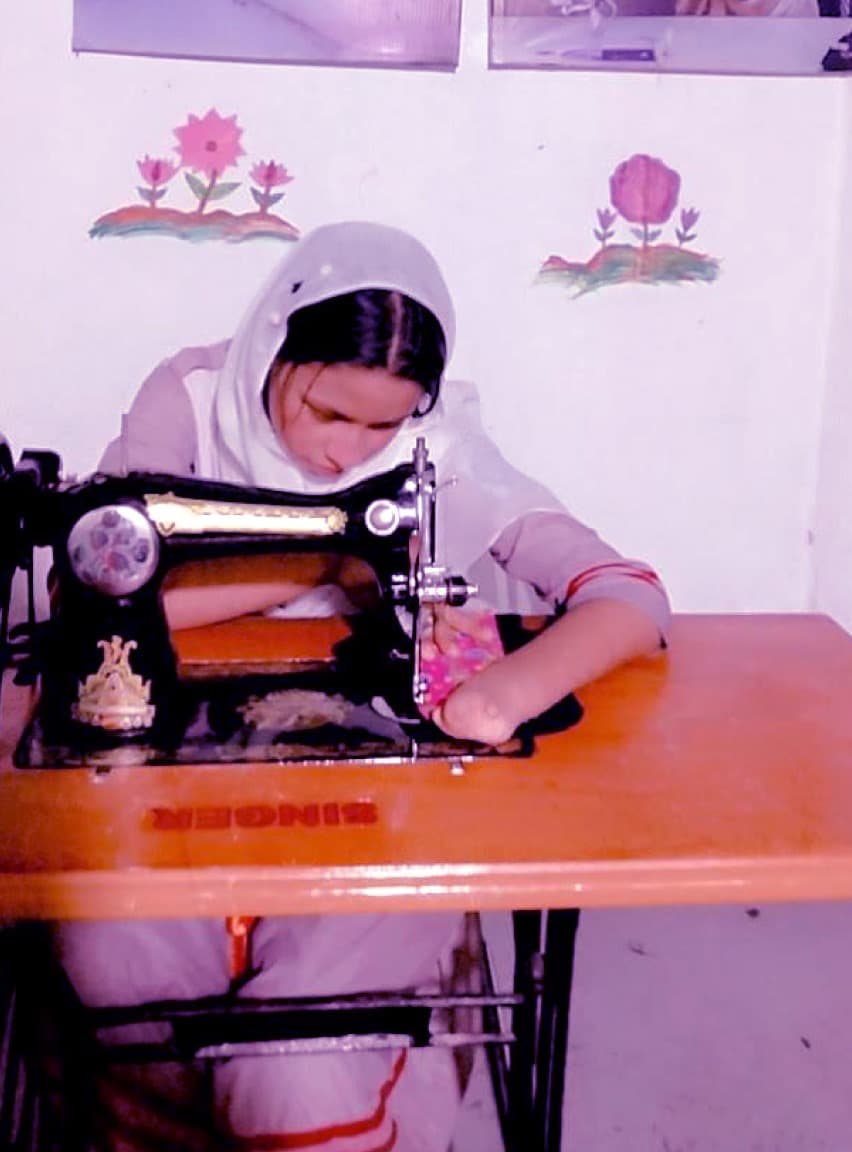
Meet Shwapna, a courageous 14-year-old from Korail slum, Dhaka. Despite losing an arm, she defied all odds to master the art of making reusable sanitary napkins at Shaathi’s free sewing center. Shwapna's determination knows no bounds as she attends the center daily, showcasing resilience and unwavering commitment.
Her journey symbolizes the incredible strength found within each individual, regardless of their circumstances. Through her perseverance, Shwapna not only acquired a valuable skill but also discovered a newfound sense of empowerment.
We salute her courage and dedication, inspired by her remarkable story of triumph over adversity.
Menstrual Health and Hygiene (MHH) Education
We believe that combining our Shaathi reusable Menstrual Hygiene Kits with an education curriculum is crucial for breaking menstrual barriers, addressing taboos and improving Menstrual Health and Hygiene of the women and girls in Bangladesh.
The Problem
In Bangladesh, only 36% of adolescent girls are aware of menstruation before of their first periods. Cultural stigma and taboos limit the scope of formally teaching adolescents about menstruation. There is no formal sex education in the curriculum, and many teachers are hesitant to address this topic in their classes. Moreover, some parents are unwilling to let their children learn about sexual and reproductive health. Research shows a lack of adequate menstrual products and facilities, lead to unhygienic practices. Adolescent girls often miss 3-4 days of school each month due to menstruation. These limitations negatively affect education, economic and social participation, health and nutritional outcomes, and overall well-being.
Our Approach
The objective of our Menstrual Hygiene Education initiative is to provide comprehensive knowledge to adolescent girls, including those who have not yet experienced their periods and those who have just begun. Our awareness sessions are led by trainers specialized in Sexual Reproductive Health Rights (SRHR). We have developed educational booklets in both English and Bangla to ensure they are accessible and understanding to all. Our partnership with USAID, Feed the Future Bangladesh Nutrition Activity and Volunteer for Bangladesh (VBD), youth wing of JAAGO Foundation has helped us to effectively engage adolescent boys and girls and create a safe space for learning and discussing menstruation.
Our Curriculum includes
- Flip Chart: It contains important information with visual aids that helps to support you during training. It can be easily printed.
- Education booklet: With visual aids on important topics that participants can take home afterwards.
- Information poster: Summarizes the most important information of the training, including the Use and Care of Shaathi pads in a fun and interactive way. Perfect to hang at schools or community centers.
- Training of Trainers (ToT): Includes a 3-4 hour curriculum on Menstrual Hygiene Management topic and Shaathi reusable pads Use and Care.
Impact so far
- Educational Outreach: Shaathi’s products, education and awareness programmes have reached 100,000+ women and girls across Bangladesh, promoting Menstrual Hygiene Management and the use of Shaathi reusable sanitary napkins.
- Training of Trainers (ToT): Includes a 3-4 hour curriculum on Menstrual Hygiene Management topic and Shaathi reusable pads Use and Care. We have provided training to over 200 young men and women across accross Bangladesh. These trained individuals’ acts as ambassadors of change, spreading knowledge and breaking down stigmas in their communities
Why it Matters
Our Menstrual Health & Hygiene Education curriculum is crucial for improving the lives of women and girls in Bangladesh. By educating them about menstrual health, we:
- Enhance Education: Reduce school absenteeism, allowing girls to continue their education uninterrupted.
- Promote Health: Encouraging the use of safe and hygienic menstrual products helps in prevention of reproductive health issues.
- Empower Women: Equip women and girls with the knowledge and skills to manage their menstrual health confidently.
- Prevention of child marriage and early pregnancy: By educating girls and their communities about menstrual health, we contribute to delaying child marriage and early pregnancy, allowing girls to pursue their education and personal growth.
- Addressing cultural barriers and taboo: We address the deep rooted cultural taboos and stigmas surrounding menstruation, creating an open dialogue to foster understanding and acceptance.
- Protect the Environment: By promoting the use of reusable sanitary napkins, which are eco-friendly and bio-degradable, we are helping to reduce menstrual waste.
%20Education.png&w=3840&q=75)